
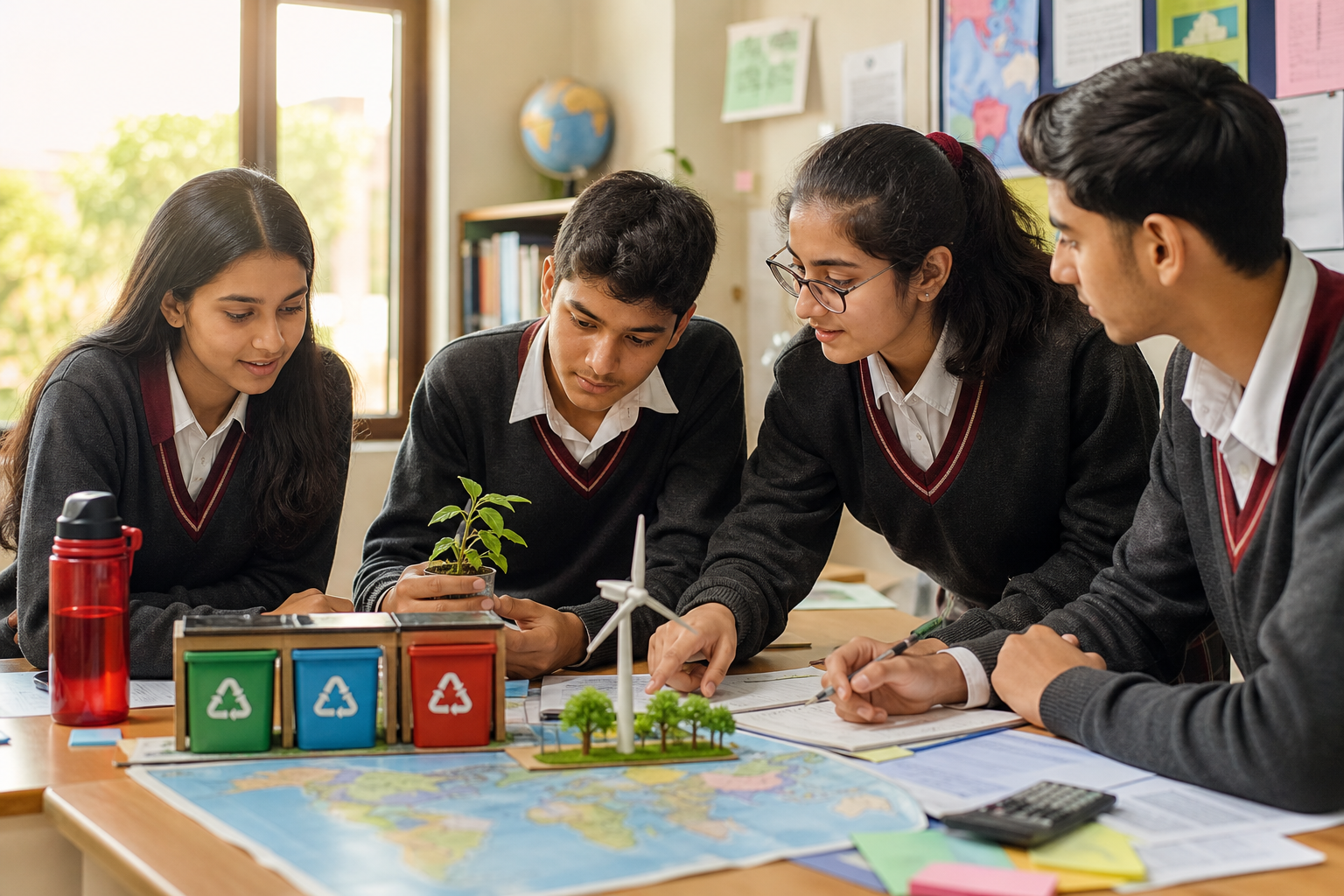
Environmental Sustainability & Eco-Living
Environmental sustainability practices
Environmental sustainability practices involve actions and strategies that minimize negative impacts on the environment to preserve natural resources for future generations. These practices include reducing waste, conserving energy and water, using renewable resources, and promoting biodiversity to maintain ecological balance.
Why we have this course and how it is going to help students in future
- By introducing this course to class 5 students, we aim to raise awareness about environmental issues and empower them to make positive changes in their daily lives.
- Children are the future custodians of our planet, and teaching them sustainable practices at a young age will shape their attitudes and behaviors toward the environment.
- The course will cover topics like energy conservation, waste management, water conservation, and the importance of biodiversity, using relatable examples like turning off lights when not in use, reducing plastic waste, and planting trees.
- Engaging activities, such as school gardening projects or field trips to nature reserves, will provide hands-on learning experiences and foster a deeper appreciation for the natural world.
- By adopting environmentally sustainable practices early on, students will develop a lifelong commitment to environmental stewardship, contributing to a greener and more sustainable future.
Environmental sustainability practices
Environmental sustainability practices involve methods and strategies that reduce negative impacts on the environment, preserve natural resources, and maintain ecological balance. This includes practices like recycling, using renewable energy sources, sustainable farming, and efficient water usage. The goal is to support long-term ecological health and ensure that future generations have access to necessary resources.
Why we have this course and how it is going to help students in future
We have selected the Environmental Sustainability Practices course for twelfth-grade students for several important reasons:
- As students are on the brink of entering adulthood and taking on greater responsibilities, it’s crucial they understand the impact of human activities on the environment and learn sustainable practices.
- This course will introduce them to key concepts like recycling, renewable energy use, water conservation, and sustainable agriculture. For instance, they might engage in a project that involves setting up a small-scale solar power setup or starting a composting program at school.
- By learning about environmental issues and sustainable solutions, students will be equipped to make informed decisions in their personal and professional lives that contribute to ecological health.
- This education fosters a sense of global citizenship and responsibility, as students learn the importance of taking action to ensure the planet remains habitable for future generations.
- Moreover, the skills and knowledge gained from this course can lead to career opportunities in the growing field of environmental science and sustainability, preparing students for meaningful roles in society.
- Ultimately, this course aims to empower students to be part of the solution to environmental challenges, making them more aware and proactive as they step into the future.