
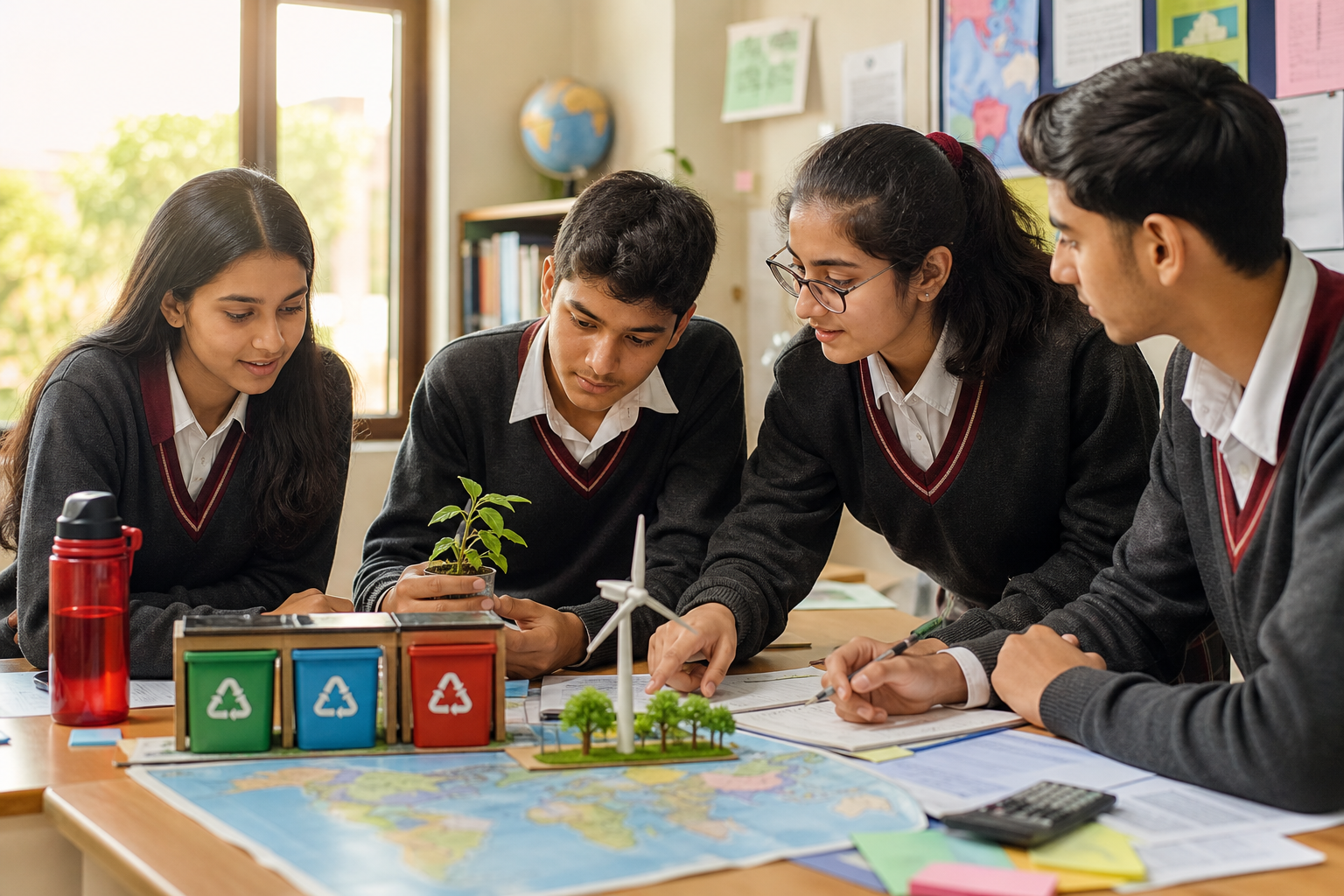
Global Citizenship & Awareness
Global citizenship education
Global citizenship education focuses on empowering individuals to understand global issues, appreciate cultural diversity, and act responsibly to foster a more just and sustainable world. It teaches critical thinking about global interdependence, promotes ethical values, and encourages active engagement in solving global challenges through local actions.
Why we have this course and how it is going to help students in future
- We have selected global citizenship education for class 8 students to broaden their understanding of worldwide issues and cultivate an appreciation for cultural diversity.
- The course will help students recognize their role and responsibility in a global context, such as understanding the impact of climate change and participating in global sustainability efforts.
- Students will engage in discussions about global events, helping them develop empathy for people from different cultural, social, and economic backgrounds.
- The curriculum includes collaborative projects that simulate real-world problem-solving, encouraging students to propose solutions to global challenges like poverty or inequality.
- Learning about global citizenship will equip students with critical thinking skills and a deep sense of ethical responsibility, valuable for navigating and contributing positively to the increasingly interconnected world.
- These experiences prepare students not just for higher education but also for future careers that require a global perspective and collaborative skills.
Global citizenship
Global citizenship refers to recognizing oneself as a member of a worldwide community and accepting the associated responsibilities and roles. It involves understanding global issues, respecting cultural diversity, and advocating for sustainable practices worldwide. Global citizens strive to contribute positively to the broader global community through informed decision-making and responsible actions that transcend local and national boundaries.
Why we have this course and how it is going to help students in future
We have chosen to introduce the Global Citizenship course to eleventh-grade students because:
- At this age, students are becoming more aware of their place in the world and the impact they can have. This course teaches them about global interdependence and the importance of cultural diversity, helping them appreciate different perspectives and traditions.
- The curriculum includes discussions on global issues such as climate change, human rights, and sustainable development. For instance, students might
explore how recycling programs in their community can contribute to global environmental efforts or examine the impact of fair trade policies.
- Students will also learn the skills necessary to engage effectively in the global community, including cross-cultural communication and international cooperation. These are essential for navigating and succeeding in a globally connected world.
- By understanding global citizenship, students are prepared to take responsible actions that contribute to building more just and sustainable societies. They'll learn how their choices can affect not just their local community but also the world at large.
- This course empowers students to become proactive contributors to global well-being, preparing them for future roles as informed and responsible global citizens in their personal and professional lives.